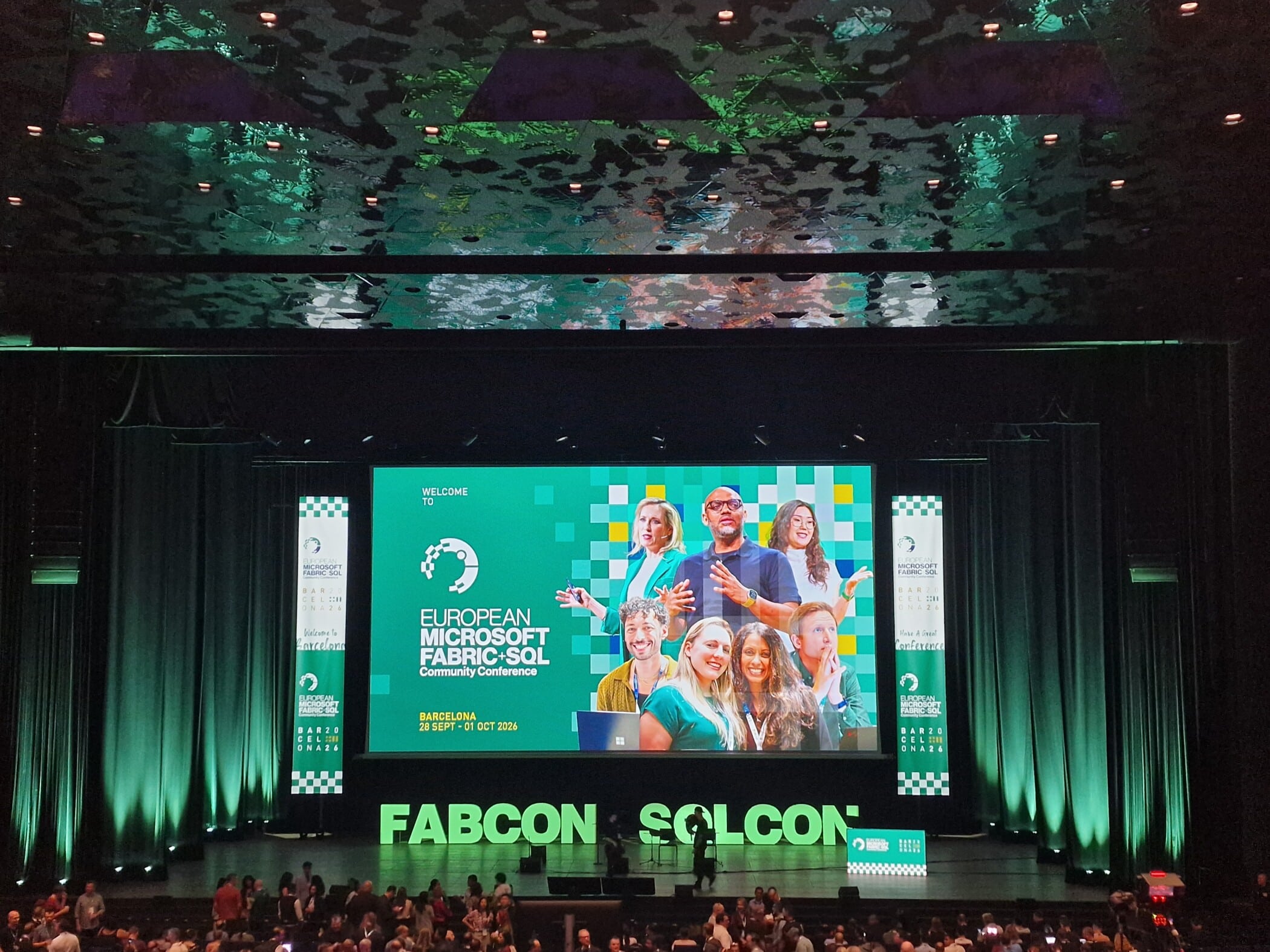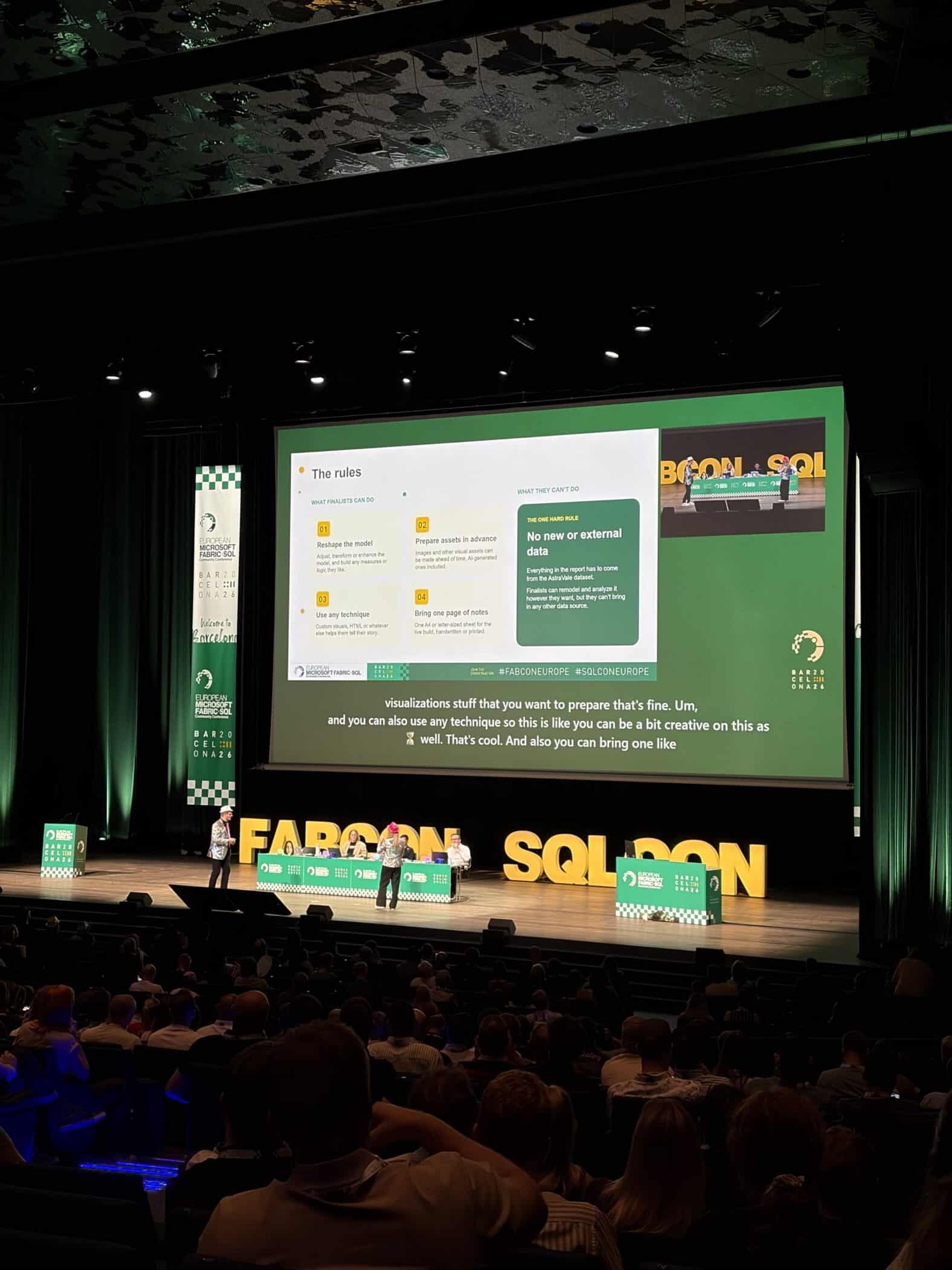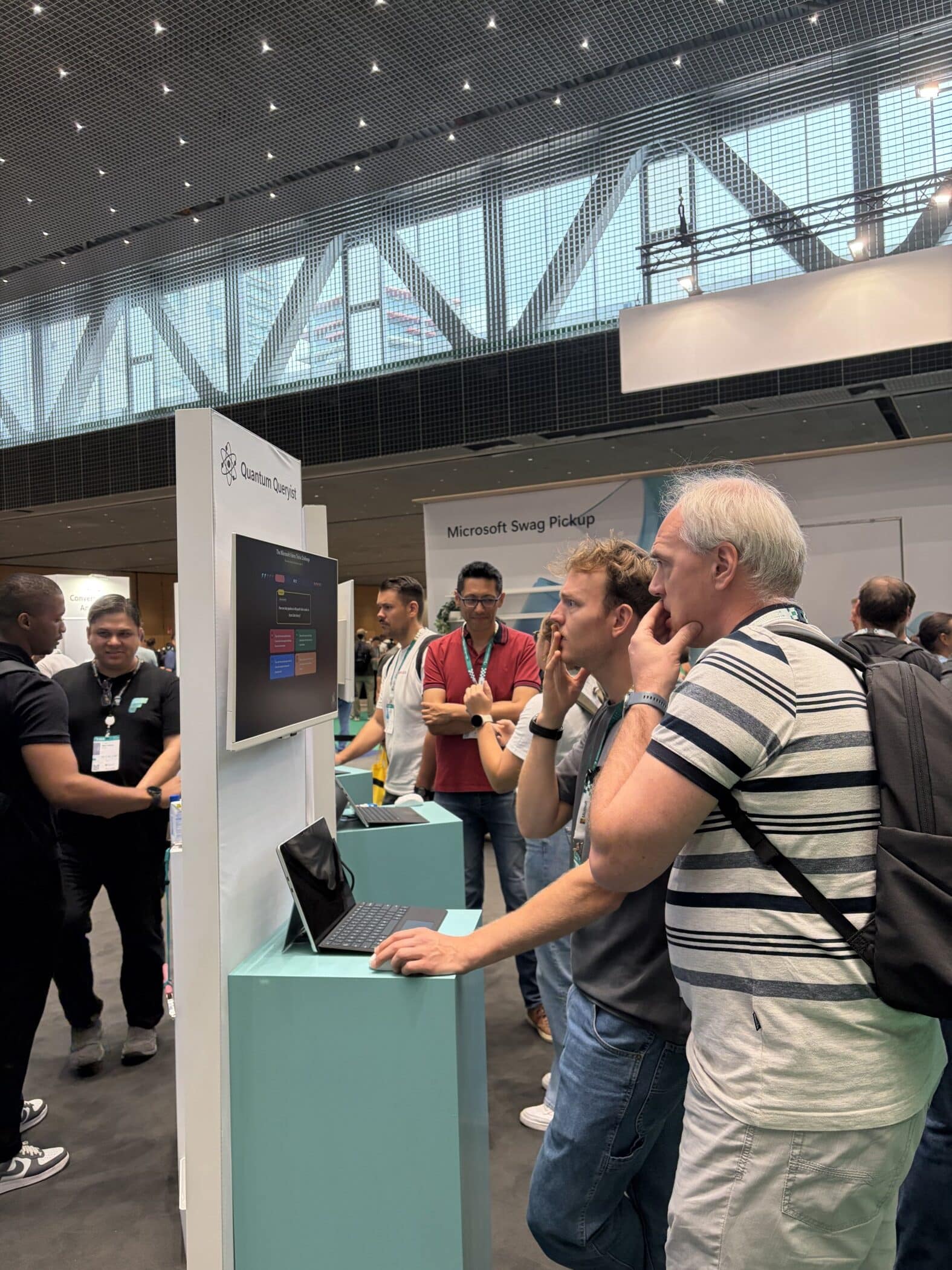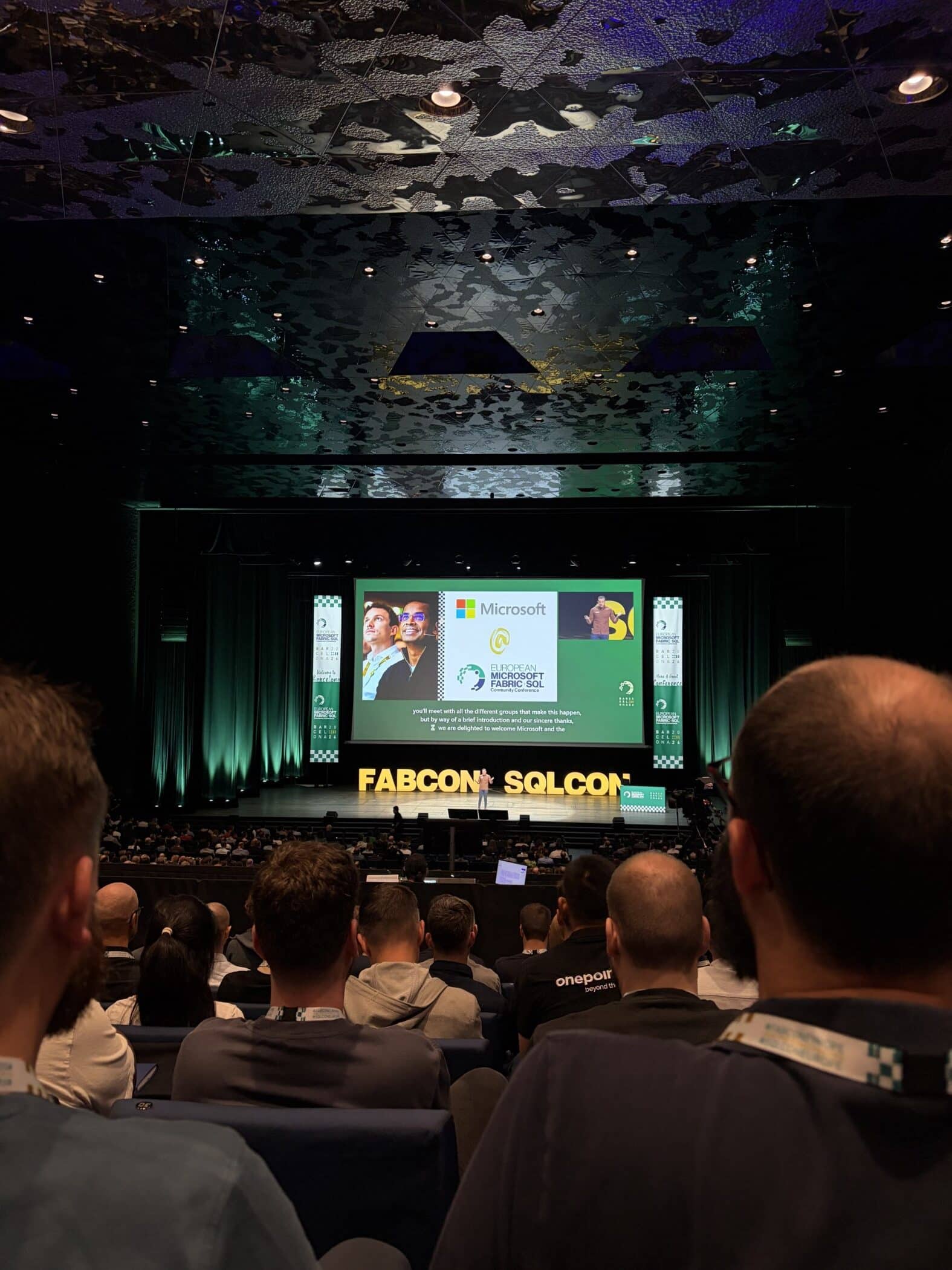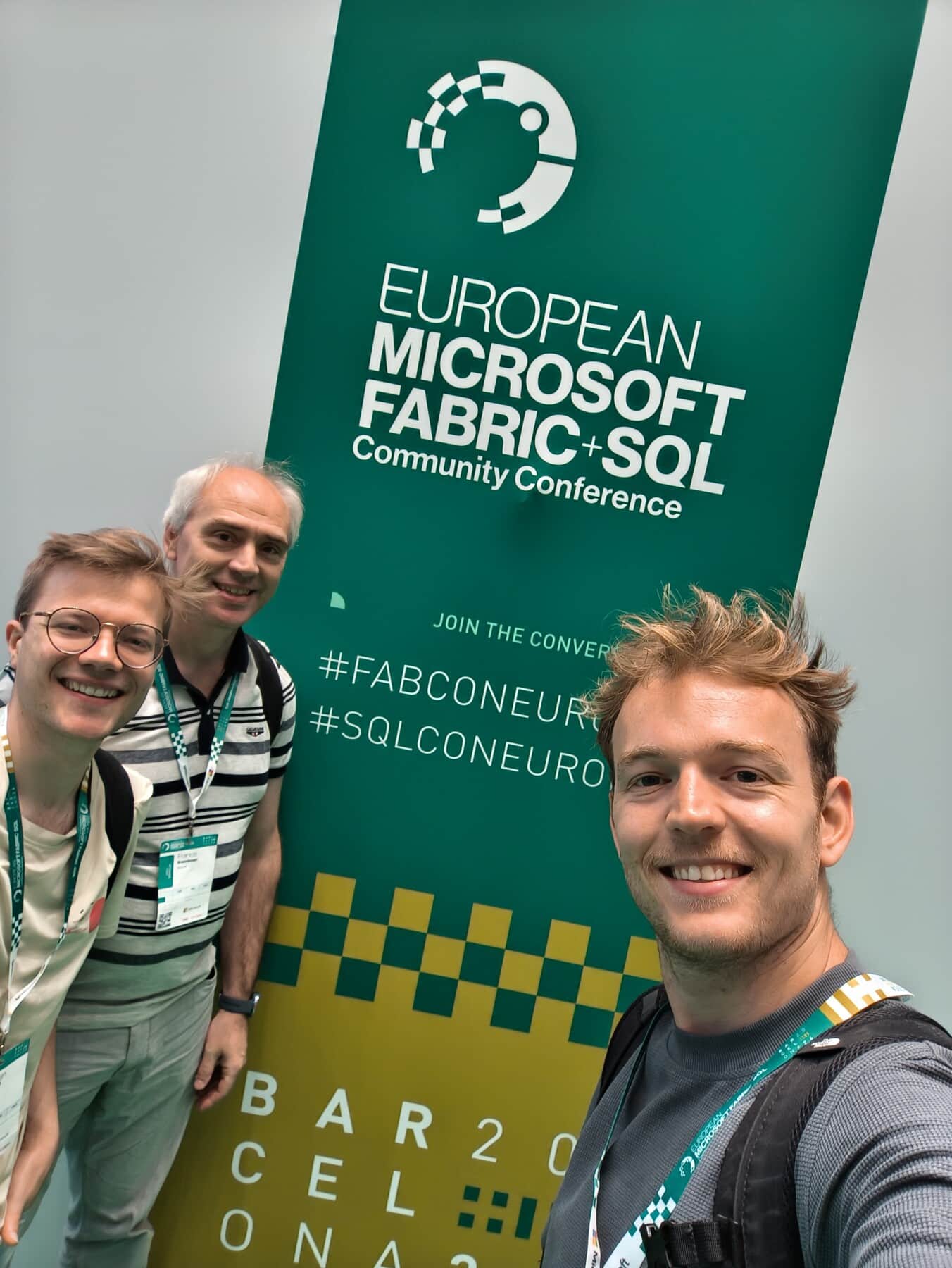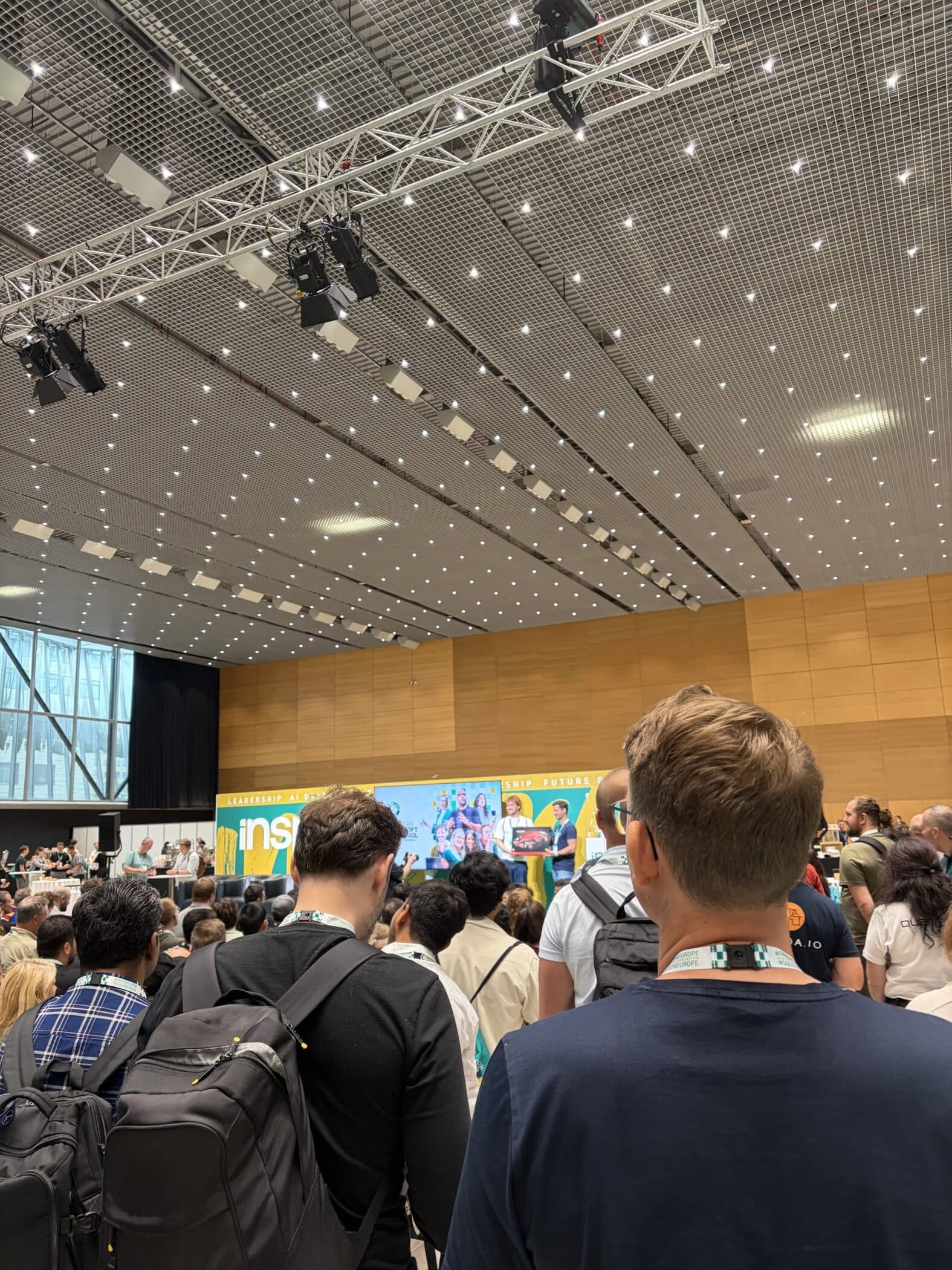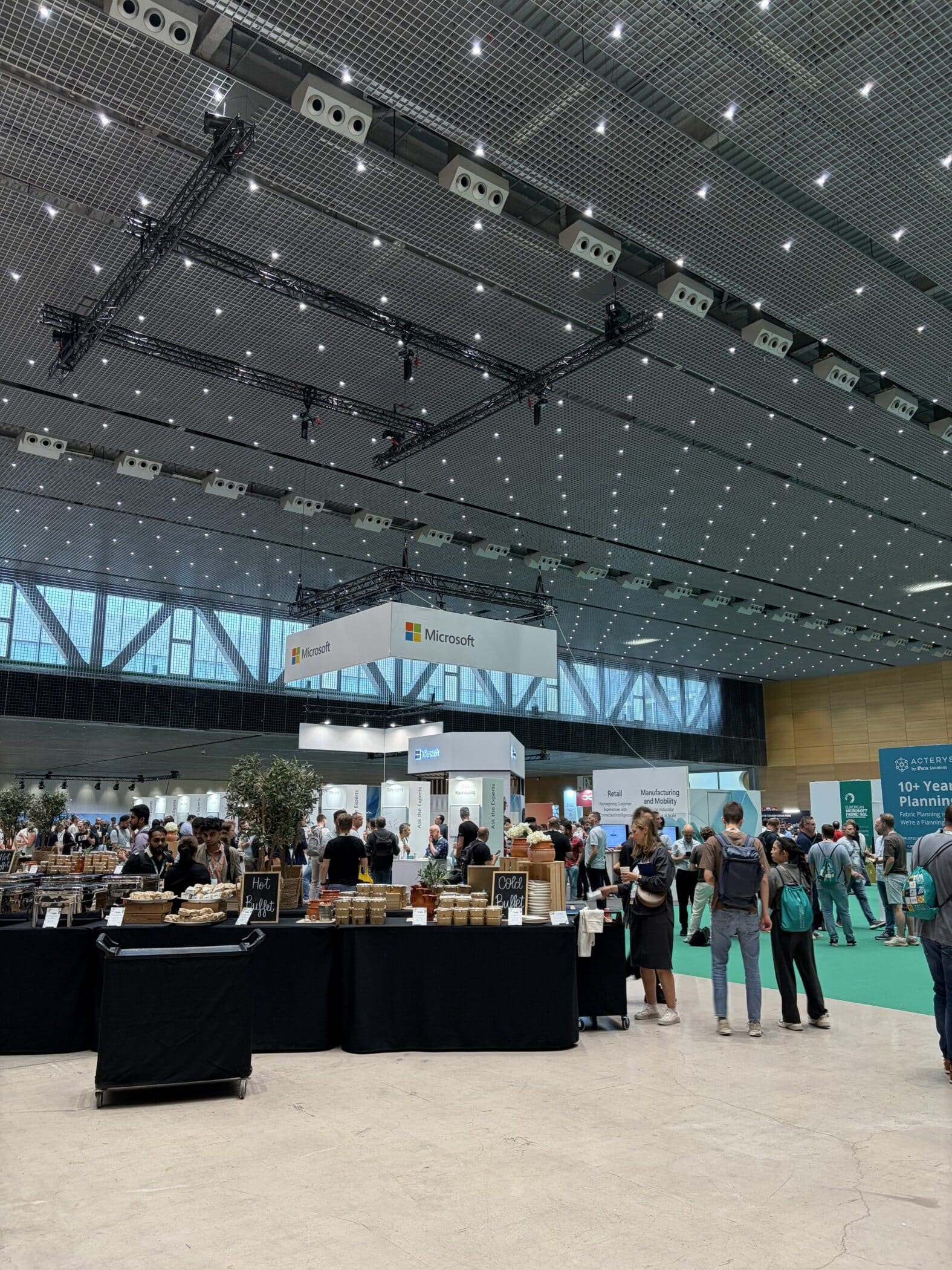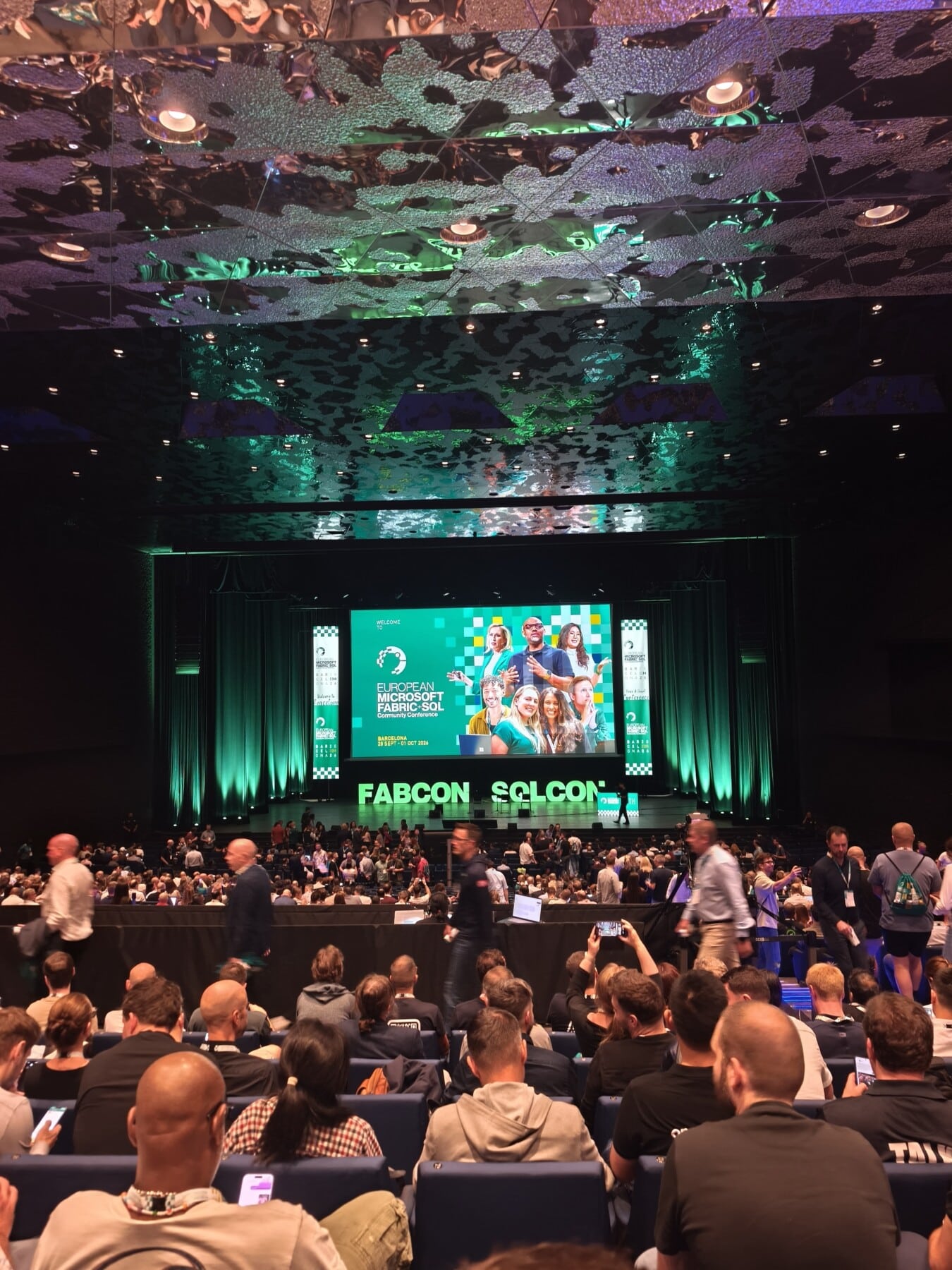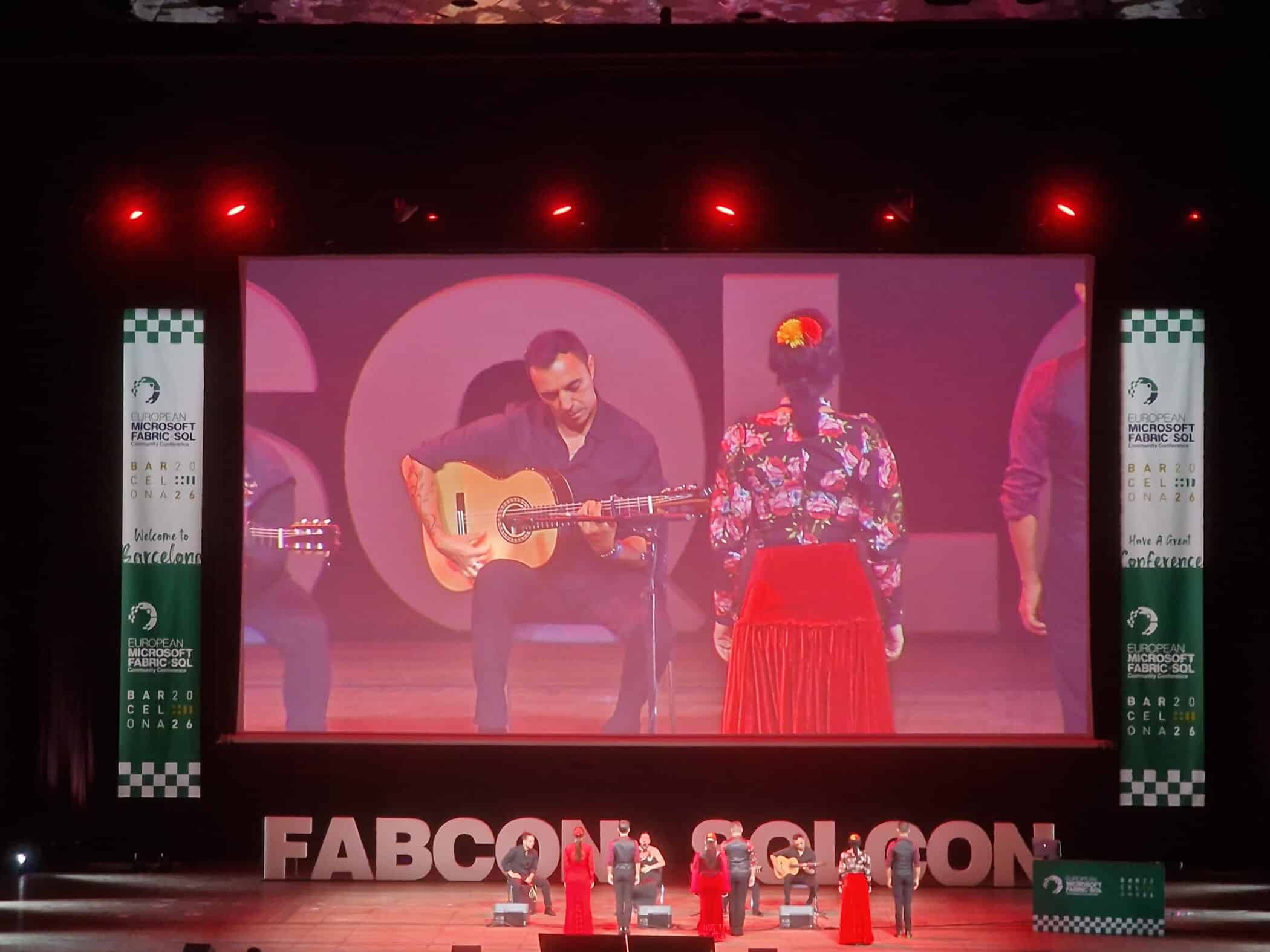


From September 28 to October 1, Francis, Thomas and I attended FabCon Europe 2026 in Barcelona. Held at the CCIB, the European edition of the Microsoft Fabric Community Conference brought together almost 5,000 data professionals across more than 130 sessions, with SQLCon running alongside it. We went to catch up on the latest Fabric and SQL developments, learn from the people building them, get some inspiration and make new connections.
Here are my key takeaways:
AI at the heart of every announcement
As usual, Microsoft opened the conference with a keynote packed with announcements, and the days after that were filled with sessions. Many were given by Microsoft’s own product teams, who went deeper into the new features.
On the Fabric side, Fabric IQ adds a semantic layer that captures business definitions, metrics and relationships, so that reports, Copilot and AI agents all work from the same understanding of the data. The Data Engineering Agent, based on Microsoft’s acquisition of Osmos, can plan and execute migrations, pipelines and performance tuning within guardrails you define. On-demand billing with the new F0 tier lets teams start without committing to a fixed capacity upfront. On the SQL side, Database Hub brings SQL Server, Azure SQL, PostgreSQL, Cosmos DB and Fabric’s own SQL databases together in one management experience. Native vector indexing also brings semantic search directly into SQL, without the need for a separate vector store.
The common thread was clear: almost everything revolved around AI. The possibilities are impressive, but Microsoft’s own sessions stayed remarkably quiet about the impact on capacity and cost. AI workloads and agents can consume a lot of compute, and with pay-per-use billing that shows up directly on the bill. This is something we’ll look into with our data team, and something we’ll keep in mind whenever we bring these features to our clients.
Fabric Apps and the future of software development
For me, the stand-out of the conference was Fabric Apps. Fabric Apps lets you build applications directly on governed Fabric data through an AI chat-first interface. You describe what you need, and the app is built for you. This is the first time I’ve seen a company and product of this scale put a chat-first way of building software front and centre. If it wasn’t clear before, it became very clear in Barcelona: this is where software development is heading.
The partner sessions were just as valuable. Partners explored other territory and demoed cases they had worked on. These real-world stories were some of the most inspiring parts of the conference, because they show what’s already possible today, beyond the roadmap slides.
Barcelona, Sagrada Família and a lot of rain
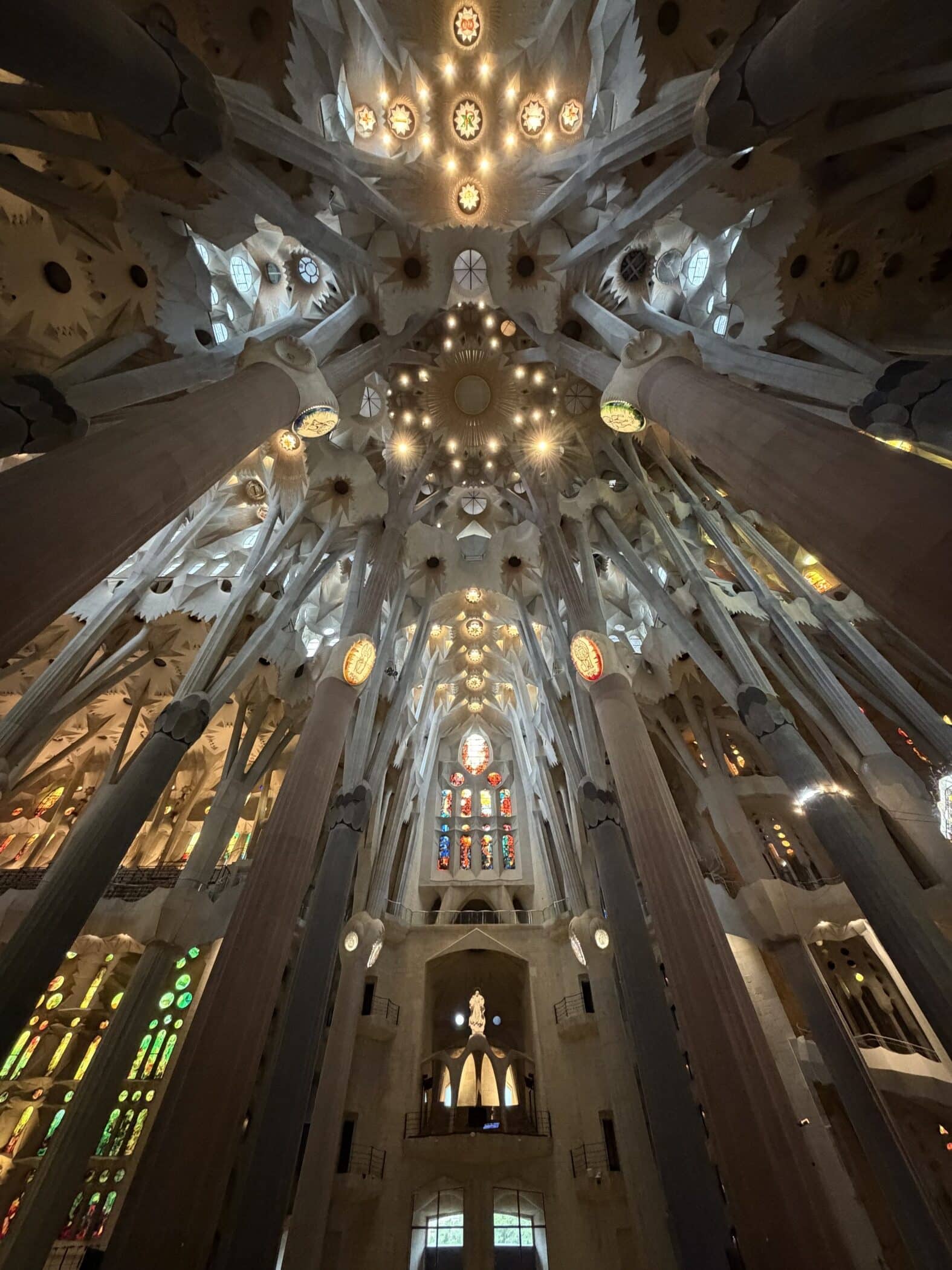
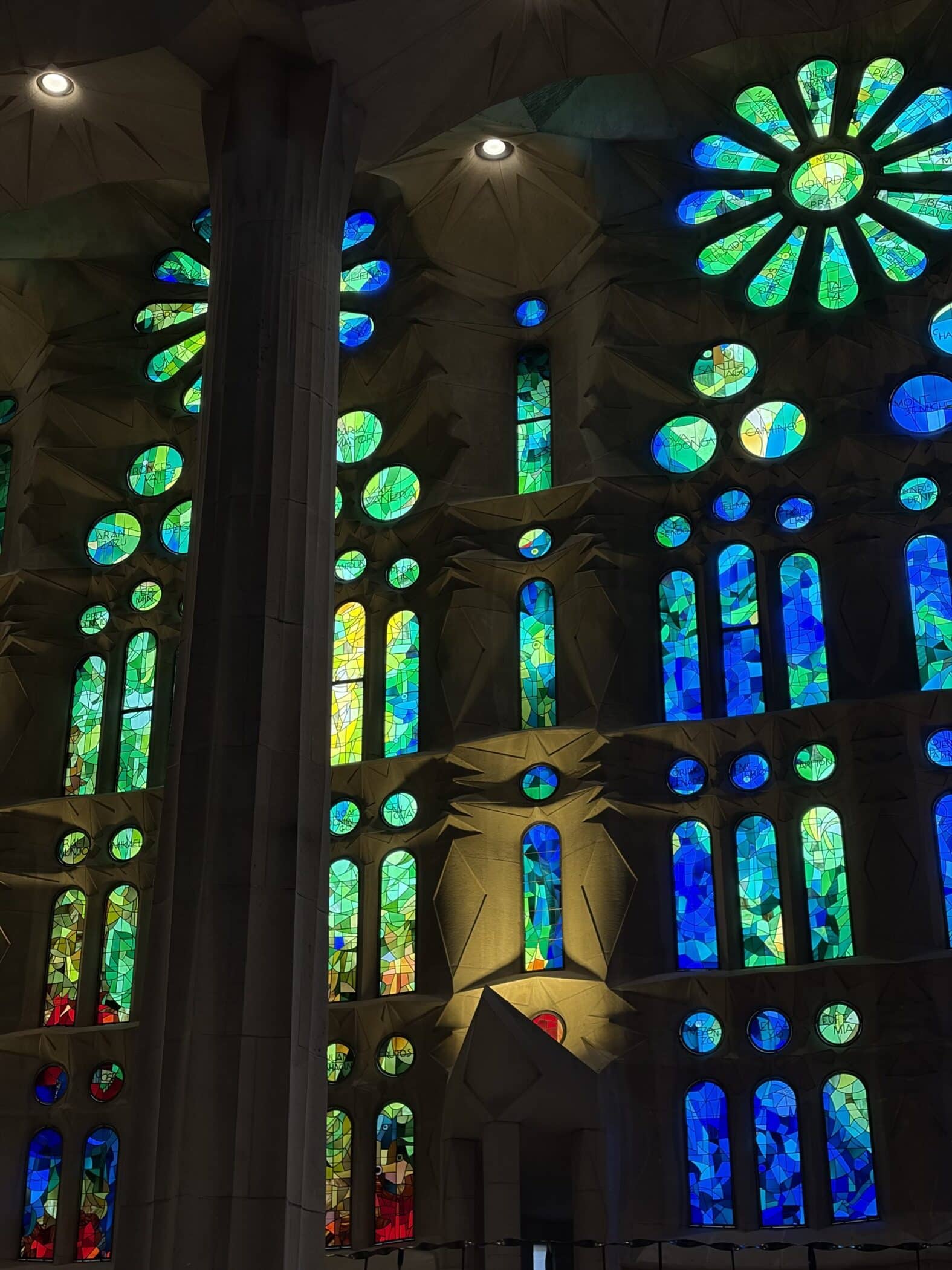
On a lighter note: having the conference in Barcelona meant we could stay a little longer and enjoy the city. It’s always good to check in on the progress of the Sagrada Família. We didn’t exactly pick the best week for it, though, as we were caught in the worst rainfall the region had seen in twenty years. That’s a perfect excuse to come back.
FabCon Europe 2026 made it clear that Microsoft is going all-in on AI across Fabric and SQL. Not every feature is production-ready yet, and the cost side still needs a closer look. But for staying on top of the platform and seeing what the future of building with data looks like, it was well worth the trip to Barcelona.
FabCon Europe 2026 in pictures
Curious about Microsoft Fabric?
Want to spar about what Fabric and AI mean for your data platform — capacity, cost and all? We’re happy to talk.