Save the Date: Sirus Connects – October 9, Ghent – aerial view of Zebrastraat venue with curved brick building

Sirus Connects 2026

October 9, 2026
Zebrastraat 32 - 9000 Ghent
09:20
- 16:00

On October 9, 2026, we’re hosting the first edition of Sirus Connects at Zebrastraat 32 in Ghent.

It’s a day where practitioners share what they’re actually working on, and showcase best practices in their field of expertise. More than fifteen speakers on software development, architecture, data, and AI.

Sessions for different levels, lunch to connect in between, and a reception to wrap things up.

Click on any session title in the program below to learn more.

We’d love to have you there.

Program

Registration & coffee

Welcome with coffee and registration.

Welcome

Opening remarks in the lounge to kick off the day.

Lunch

Reception

Closing with reception and networking.

Register for Sirus Connects 2026

With the support of

Good to know

Getting there

By car: The venue has an underground parking at Gustaaf Callierlaan 231 (max. height 2m), available 7 days a week at €1/hour. You can enter between 6am and 11pm. Payment by cash or Visa.

By public transport: The venue is easily reachable by public transport.

  • From Ghent-Sint-Pieters station: take bus at “Gent Leeuwstraat” stop (10 minutes).
  • From the city centre (Korenmarkt): take tram 4 (15 minutes).
Share via:
Facebook
Twitter
LinkedIn

Introduction to Linked Data & Data Spaces

What, why, how?

The use of image and video data within organisations and governments

Jelle and Stefaan demonstrate how Sirus, together with organisations, cities and local governments, deploys image data to replace manual, repetitive work with automatic annotation and computer vision. Through concrete cases, they discuss architectural choices, the buy-vs-build trade-off, and the challenges around trust, privacy and adoption that arise in every digital transformation.

Want to dive deeper?

Stefaan obtained his PhD in Industrial Engineering: Computer Science at Ghent University, focusing on LLMs, machine learning, and big data. At Sirus, he builds AI solutions for extraction from policy documents, metadata enrichment, intelligent search tools, and computer vision for detection and monitoring in operational environments.
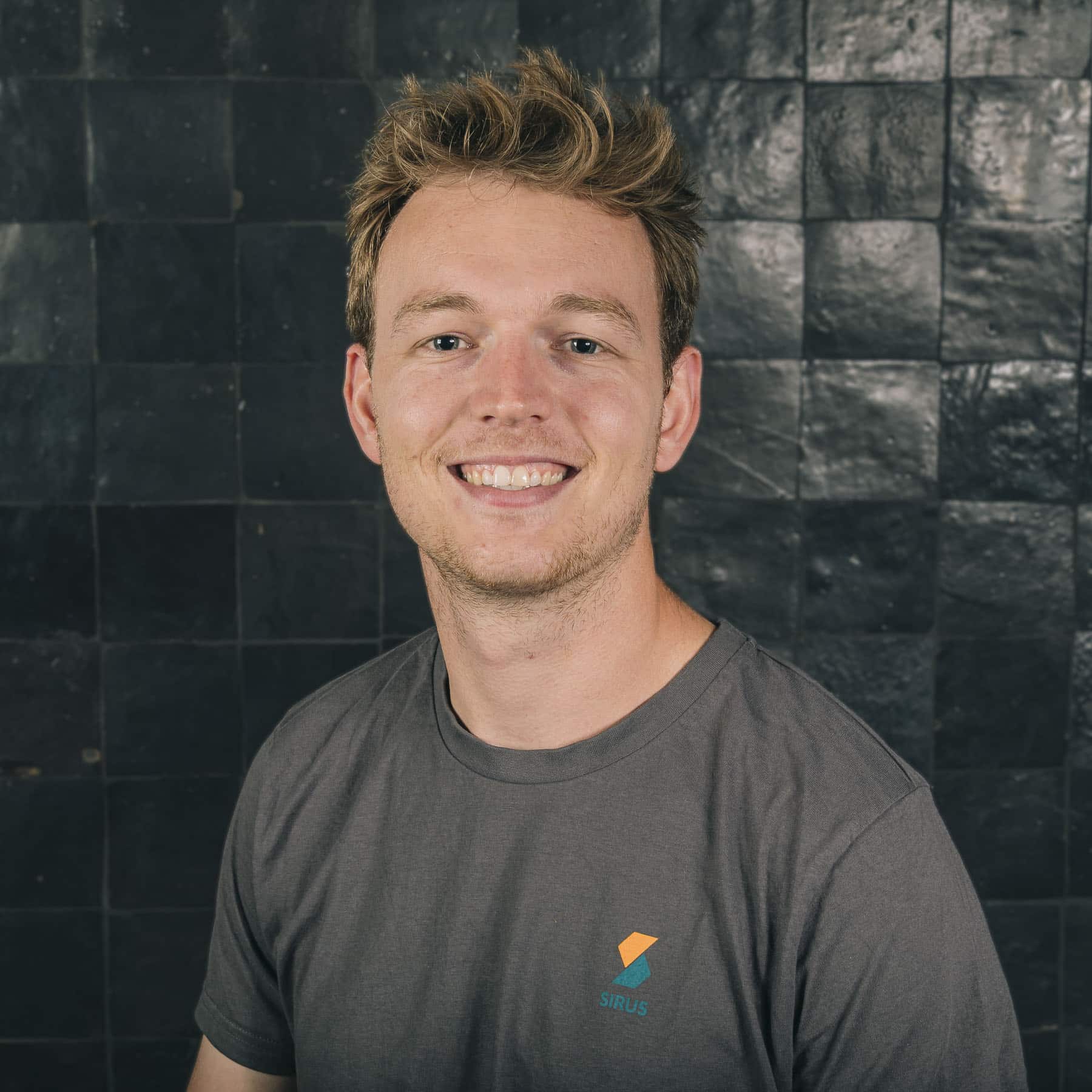
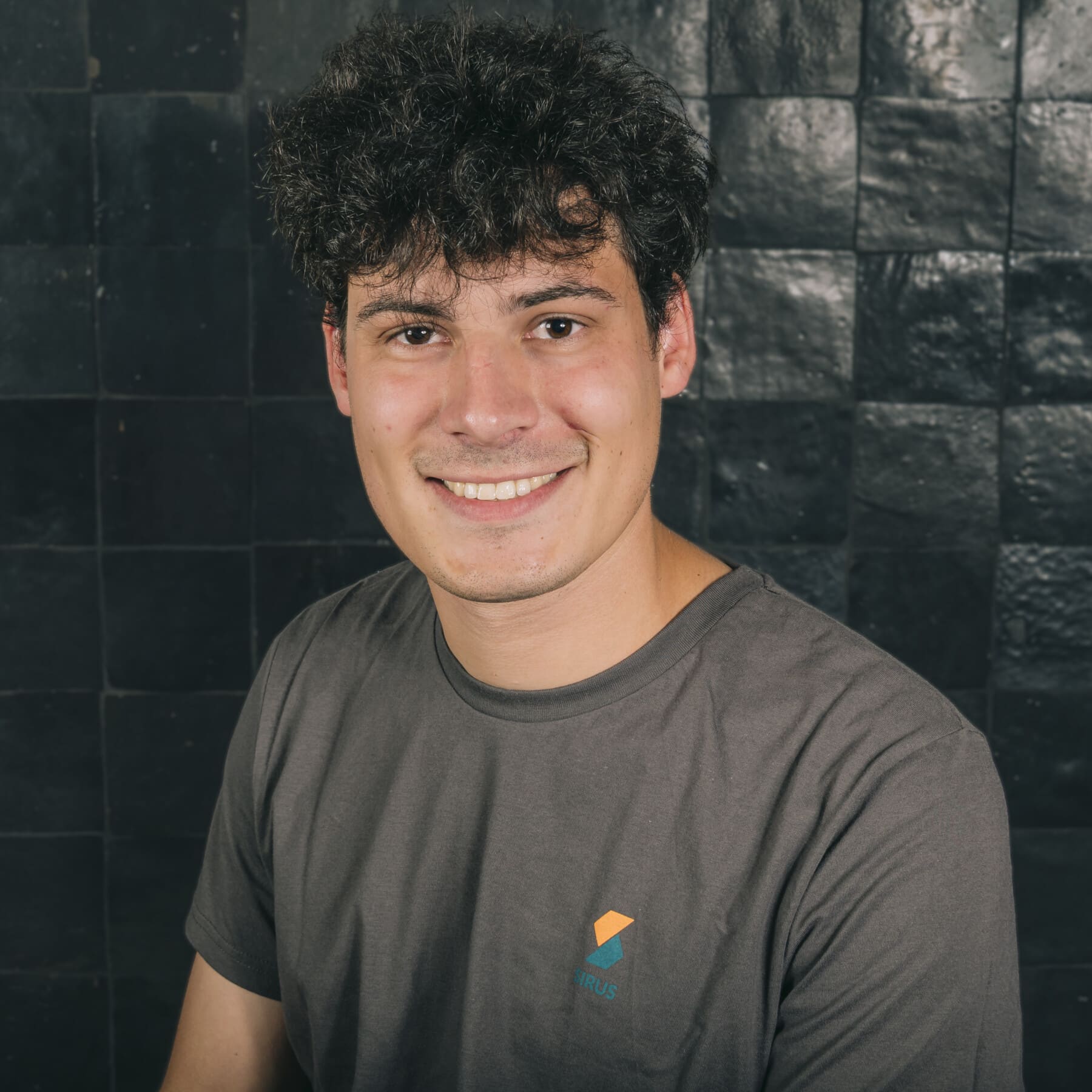
Professional headshot of Stefaan, Sirus team member, smiling in brown shirt against dark brick wall background
Stefaan Vercoutere
Computer Vision Engineer, Sirus
Jelle completed his PhD at Ghent University in 2023, researching multimodal data (photos, video, GPS) to improve safety in cycling races. At Sirus, he helps clients use (video) data to enhance citizen safety and business performance.

From 1 IT list with definitions to end-to-end data governance & quality

Liantis' journey with dScribe

Learn how Liantis moved from a single table of definitions managed by IT towards organisation-wide data governance and quality, together with business key users and their first data steward. Not through a heavy waterfall approach, but through pragmatic, step-by-step growth over the past two years.

Linked Data: From Zero to Hero

How do you start with Linked Data as a beginner? A guided tour through the Linked Data ecosystem from Thomas’ personal perspective: YouTube playlists, tutorials, tooling on GitHub, playgrounds and the sometimes well-hidden resources that turn out to be genuinely useful. A practical quick-start guide for anyone who — just like he once was — has no idea where to begin. 

Want to dive deeper?

Thomas is a Data Engineer at Sirus and actively contributes to tooling within a Linked Data research project. When he joined Sirus, “Linked Data” meant nothing to him — that self-study journey now forms the foundation of his talk.

Citizen Development in the Age of AI: The Technical Governance Blue­print

Citizen development is a strategic accelerator: business users build their own apps and automations with Power Platform, n8n or Copilot Studio. Without governance, however, it becomes shadow IT. Jan and Kristof show how a lightweight blueprint — platform policy, risk classification, connector and data access control and a Center of Enablement — accelerates innovation without exposing the organisation to compliance risks.

Want to dive deeper?

Jan is co-founder of SirusAI and guides organisations in scaling AI adoption and citizen development. With 20+ years of experience in digital transformation, he previously built data and AI organisations at Oracle, StepStone and Bricsys (Hexagon). He combines strategic advice with hands-on work on the modern AI stack (LLMs, Copilot Studio, Power Automate, n8n).
Kristof is M365 Consultant and Competence Lead with 20+ years of experience in Microsoft technologies. His focus is on M365, SharePoint Online, Power Platform, Azure and governance — primarily within records and information management for the public sector, European institutions and regulated environments.

Agnostic Integration Patterns Advanced

Abstracting your integration with Dapr

Cloud-native goes deeper than adopting managed services. Tim shows how to build truly infrastructure-agnostic integrations with Dapr and API management — from synchronous service-to-service communication to asynchronous event-driven workflows. Familiar patterns are revisited through a modern, abstract lens, yielding flexible integrations that are portable, resilient and independent by design.

Want to dive deeper?

Tim is an Enterprise Solution Architect with a strong focus on modern application architecture and integration in distributed systems. He designs scalable, future-proof solutions that are not only cloud-native but truly infrastructure-agnostic. With hands-on experience in cloud, on-premises and hybrid environments, he specialises in applying proven integration patterns via tools such as Dapr and API management to decouple systems from the underlying infrastructure.

Building a Linked Data Space with AI and Human in the Loop Advanced

Data Spaces promise sovereign, interoperable data exchange — but in practice friction arises around identity, trust, data modelling and exchange. Brecht, Martijn and Stefaan explain how they addressed these layers with Linked Data Event Streams, SPARQL, Named Entity Recognition & Linking, MCP and Verifiable Credentials. An honest account of choices, pitfalls and human-in-the-loop AI annotation. For data engineers, developers, architects and analysts.

Want to dive deeper?

Brecht is a driven and pragmatic LD expert with a passion for exchanging linked data. Coming from a research background, he works with domain experts to describe datasets in a machine-readable way according to standards, and builds architectures to expose those datasets within applications — primarily within (local) governments and cultural organisations.
Stefaan obtained his PhD at Ghent University on LLMs, machine learning and news recommender systems. At Sirus, he translates that expertise into AI solutions for clients: automatic information extraction, metadata enrichment, intelligent search and analytics tools, and computer vision.
Professional headshot of Stefaan, Sirus team member, smiling in brown shirt against dark brick wall background
Stefaan Vercoutere
AI Expert, Sirus
Martijn obtained his bachelor's degree in Applied Information Technology: Application Development from HOGENT and his master's degree in Industrial Sciences: Computer Science from Ghent University, where he dedicated his thesis to the visualization of linked data. It was there that he first bridged the gap between semantic web technologies and practical application development. At Sirus, he puts that combination into practice: helping local governments shape their linked data strategies and developing the accompanying applications, from triplestore and API to frontend.

From Import to Direct Lake: Storage Modes in Power BI Explained

A deep dive into the storage modes within Power BI — Import, DirectQuery, Dual, Hybrid Tables and Direct Lake — and their impact on performance, scalability, governance and cost. Saar focuses on the practical trade-off: when do you choose which mode and why? Using realistic scenarios, you will learn how Direct Lake changes the rules in the Fabric era. 

Want to dive deeper?

With more than twenty years of experience in Business Intelligence within the Microsoft ecosystem, Saar helps organisations derive value from their data. Her strength lies in translating business objectives into sustainable data solutions — from requirements and architecture to an executable data strategy. She often acts as a bridge between business and technical teams. Her extensive experience with Microsoft BI, Power BI and Microsoft Fabric makes her exceptionally well placed to explain design choices within modern analytics environments.

Don't test in production. Experiment in it. Advanced

How we migrated employment history without a single sleepless night.

Steven Decoodt is a solution architect with twenty years of experience across payroll, insurance, and industrial domains — and a clear point of view on what makes architecture actually hold up in production. From SharePoint and .NET integrations to today's pragmatic, event-driven architectures, he's bringing that experience to the stage.

Connecting the dots: from data strategy to real business impact

Every organisation wants to become data-driven, but few succeed. Sarah explains why technology alone never makes the difference: depending on your organisation’s maturity, you need to lay the right foundations across process, data, governance, technology, organisation and communication. With a focus on a handful of use cases that genuinely create value, and change management as the lever to drive adoption. 

Want to dive deeper?

Sarah has 20+ years of experience in data, governance, innovation and transformation. As a bio-engineer with a master’s in marketing management, she combines analytical depth with people-centred leadership. She has guided data transformations at Vandemoortele, Agristo, Ardo, Daikin Europe, VITO and P&V Verzekeringen, in roles that bridge strategy, governance and the shop floor. Certified Change Manager (Prosci ADKAR) and Business Process Manager — and has experienced transformation both as an internal data manager and as a consultant.

Fabric Architecture, Capacity Optimization & Embedded Analytics Advanced

When implementing a data platform, you quickly run into a number of challenges. Budgets are often limited, data can be sensitive and information may come from multiple sources. In this session, I’ll share practical insights, tips and tricks to help you tackle these challenges.

Want to dive deeper?

Thomas obtained his bachelor’s degree in Multimedia and Communication Technology at Howest and his master’s degree in Industrial Sciences: Computer Science at Ghent University. In his thesis, he explored how decentralised data can be made more scalable through smart source selection. After graduating, Thomas spent several years working as a software engineer, gaining experience in everything from embedded software for Linux to .NET web applications. He then shifted his focus back to data. Over the past year, Thomas implemented a completely new reporting platform in Microsoft Fabric for his client, SynerSec. In his talk, he will share the key lessons he learned along the way. He will focus on how to set up an architecture within Fabric, how to make the most efficient use of your chosen Fabric Capacity, and how to embed Power BI reports into external applications in a cost-effective way.

Keeping your solutions simple and how AI can help Advanced

Simple is harder than complex

Complexity often creeps in through multiple channels: limited domain knowledge, over-engineering, FOMO on new tech, chasing silver bullets. Robin takes you through the pitfalls from twenty years of experience and shows how to make simplicity a conscious choice. He also demonstrates how AI becomes a concrete ally — for describing existing behaviour, refactoring proposals, option trade-offs and tests. Practice-oriented for developers and tech leads.
Robin is a solution architect with more than twenty years of experience in software development. He has worked in complex domains — from payroll engines and flexible remuneration to pensions and the energy sector — and has built deep expertise in the .NET ecosystem, from legacy integrations to modern Azure solutions. Practical, honest and directly applicable — with an eye for maintainability and the reality of the workplace.

Don't Prevent Failure, Design for Recovery Advanced

What breaks in a 24/7 streaming platform, and how you get the data back

A 24/7 sensing platform never pauses for repairs. Sensors keep sending, cities keep reading, and every fix has to happen while both sides keep running. Drawing on two years of operating Urban Sense across seven Belgian cities, this talk walks through the full catalogue of things that went wrong for us, the four principles that came out of it, and the two repair operations we run when data goes missing or comes out wrong. Real failures, concrete fixes, nothing theoretical.

Want to dive deeper?

Data engineer with production experience across a wide range of urban and environmental sensing domains, from weather, noise and air quality to traffic, parking, water levels and beyond. Has been leading operations on the Urban Sense platform since 2024, keeping real-time data flowing from hundreds of sensors across seven Belgian cities including Gent, Leuven and Brugge.

Practical security in the modern threat landscape

The threat level is rising and NIS2 obliges organisations to sharpen their cyber resilience. But NIS2 and the CyberFundamentals framework often provide insufficient guidance to make this achievable in practice. Joeri lifts a corner of the veil: how do you weave cybersecurity into your daily project work, and what does a concrete translation of such a framework look like?

Want to dive deeper?

Joeri has been active in IT for more than twenty years and has witnessed the cybersecurity threat grow exponentially. As a software architect at the City of Antwerp, he helped support recovery after the 2022 cyberattack — and experienced first-hand that the theory of security best practices does not translate to practice by itself. At Sirus, he applies those lessons within data projects and helps translate the legal obligations of NIS2 into concrete project work.

Towards FAIR data: building a self-service platform focused on maturity and transparency

Good enough to trust a dashboard is not the same as good enough to cite.

Timothy traces one research platform between those two standards and proposes three shifts along the way. Treat FAIR as a compass for the consumers who cannot ask you anything, rather than a checklist to clear. Keep documentation in the repository beside the model, so one merge produces one catalog entry. And let a researcher walk back to any date and cite a snapshot, instead of citing “the database”.

Built on Microsoft Fabric, dbt and an integrated data catalog, with an honest look at how far it got.

Want to dive deeper?

Timothy helps organisations future-proof their data architecture. He designs scalable data platforms in which self-service, governance and data quality go hand in hand, working daily with Microsoft Fabric, dbt and data catalog tools. One principle is central to his approach: data must not only be available, but also understandable, reusable and trustworthy — which is why he strongly advocates the FAIR principles within organisations.

Keynote: Moonshot thinking, extreme collaboration, and leadership under pressure

What happens when teams dare to think beyond what seems possible and commit to a goal greater than themselves?

Drawing on the world of space exploration, Stijn Ilsen takes audiences on a journey through moonshot thinking, extreme collaboration, and leadership under pressure. Through real-life experiences from space missions, he demonstrates the techniques, methods, and mindset required to turn seemingly impossible ambitions into reality.

This is not abstract theory, but a collection of inspiring lessons that resonate, spark action, and help organizations take bold steps toward the future.